High school student · Class of 2027
Austin Amissah
I am a student at The Lawrenceville School, and outside class I work on projects in physics, computation, and energy. The main one works out the cheapest way to run a home solar battery, which for a real Colorado home comes to $456 a year on top of the $971 its panels save, and once you see the arithmetic it fits on a napkin. What surprised me was that a bigger battery earns nothing, because what pays is how fast the battery can empty rather than how much it holds. After that I wrote the quantum version of the problem and ran small cases of it on a real quantum computer to see what survived the noise, which led to a way of asking the question in under half the qubits, although the full day is still too big for today's hardware.
My second project is about the math that decides who owns every Bitcoin. After reproducing the best known quantum circuit for breaking it, I published that the circuit could not be improved, and over the next three weeks a single automated searcher improved it 25 times. So I went back to measure what an improvement costs to find.
Every number my own programs produce traces to code you can run, and where a figure comes from somewhere else, I say where. I write up what I find, including the parts that did not work.
The overview covers all three projects in brief. Or start with the interactives: run the battery optimizer or drag points on the Bitcoin curve. The solar project's corrections are collected at what I got wrong. The circuit project's begin with the claim I had to take back.
Portfolio
Selected projects
Quantum Solar Optimization
Running a home battery on the cheapest schedule is worth $456 a year for a real Colorado home, and the number has a closed form: eight kilowatt-hours sold in the four peak hours, every weekday. I built an exact optimizer to confirm it on all 365 days from public Department of Energy data, then sent small versions of the problem to an IBM quantum machine six times, writing my prediction down before each run. At six time slots the circuit already needs more gates than the noise allows, and the full day would take 52 qubits. The ordinary computer solves it in microseconds. The open question is what the quantum side is good for yet.
Quantum Circuit Optimization for ECDSA
ECDSA.fail is an open competition to find the most efficient quantum computer circuit for breaking the cryptography that guards Bitcoin. Besides beating the best score on the leaderboard, a submission has to pass a correctness test generated from the circuit itself, so every edit re-rolls the test. Landing an improvement means searching millions of re-rolled candidates for one that passes, a cost the score does not count. I measured that cost, built a filter that spots a failing candidate in milliseconds instead of the official checker’s twenty seconds, and lost my own attempt to a leaderboard that moved faster than my laptop could search.
Summer 2026
Research internship at Brookhaven National Laboratory
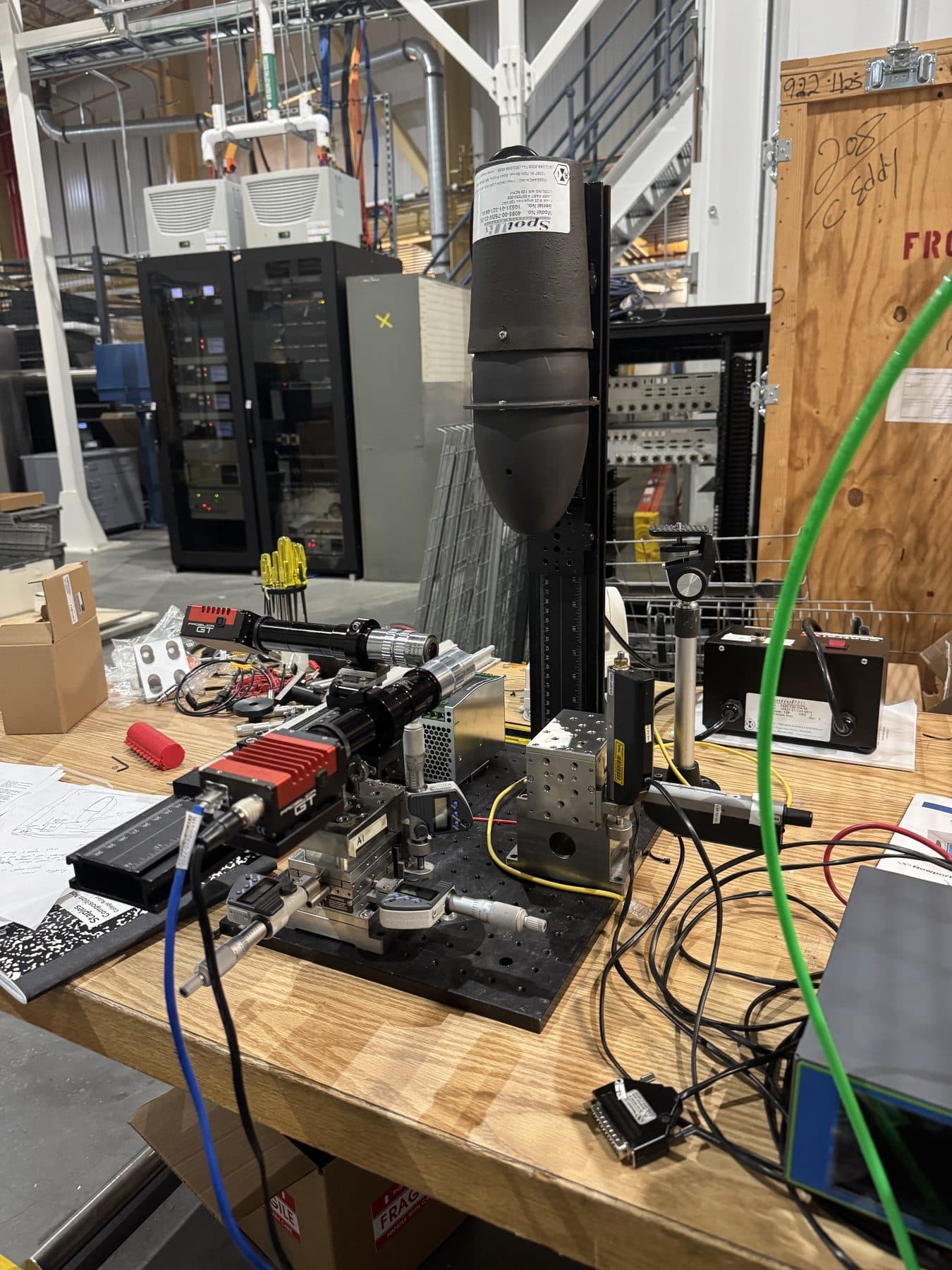
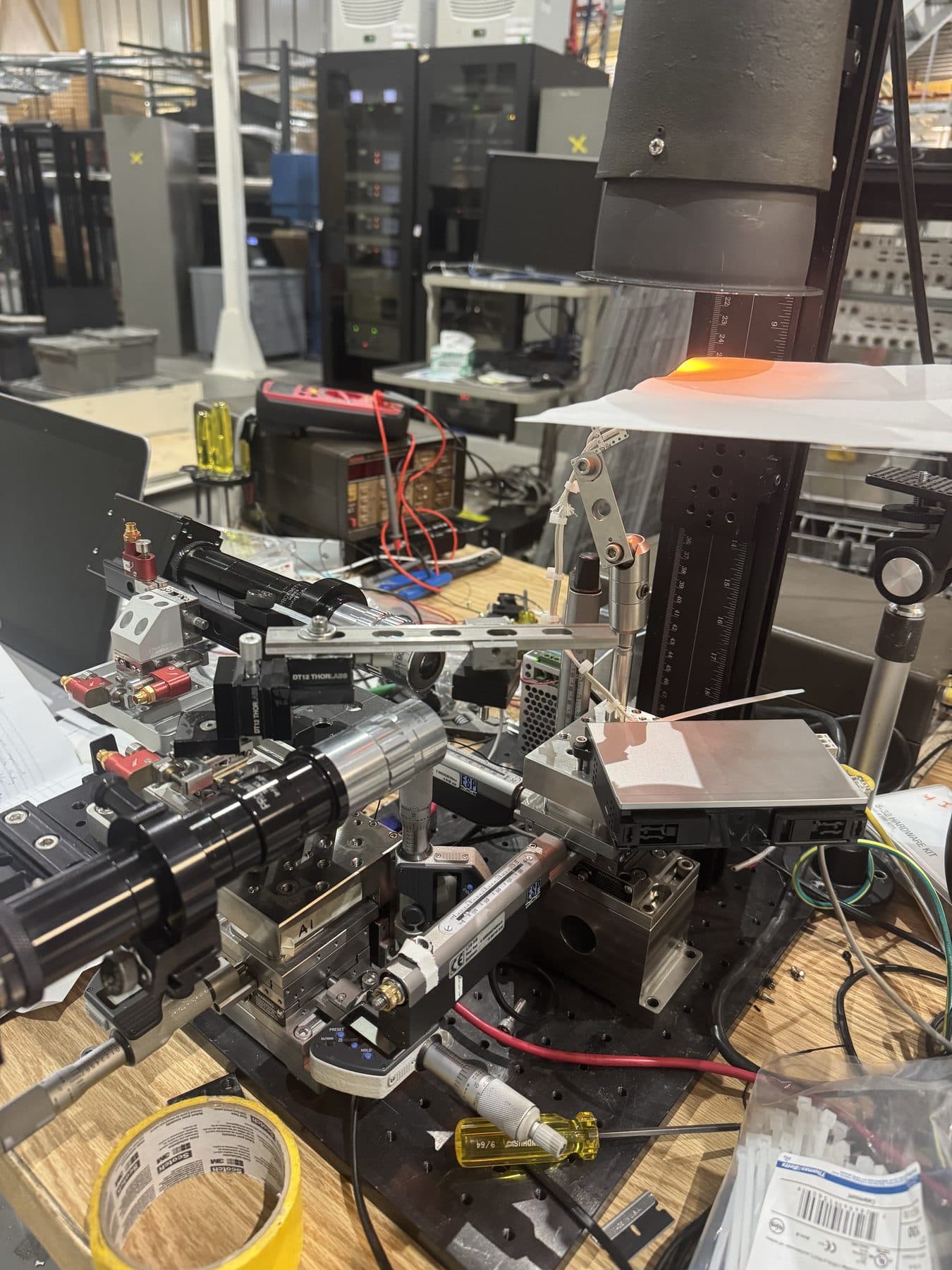
I was selected for the High School Research Program and spent six weeks at a U.S. Department of Energy national laboratory, July 6 to August 14, 2026, the summer between my junior and senior years, working on the furnace pictured below. My job was to find where its light comes to a focus and to map the shape of the beam around that point, which I then presented as a poster.
Get in touch
Interested in this work?
Email is the best way to reach me. I read everything, though replies can take a while.